
SDK STT
Speech recognition
Turns speech into text, with one output head per language so Creole and French are never confused. 2.15 % character error rate on average, on the device.
- wav2vec2one model for 4 languages
- 355 MBint8, on device
Voices. Languages. Your machines.
Speech recognition, speech synthesis and translation, entirely on the device. Built for Malagasy, Mauritian Creole, French and English — where the big services don't go.
Our SDKs
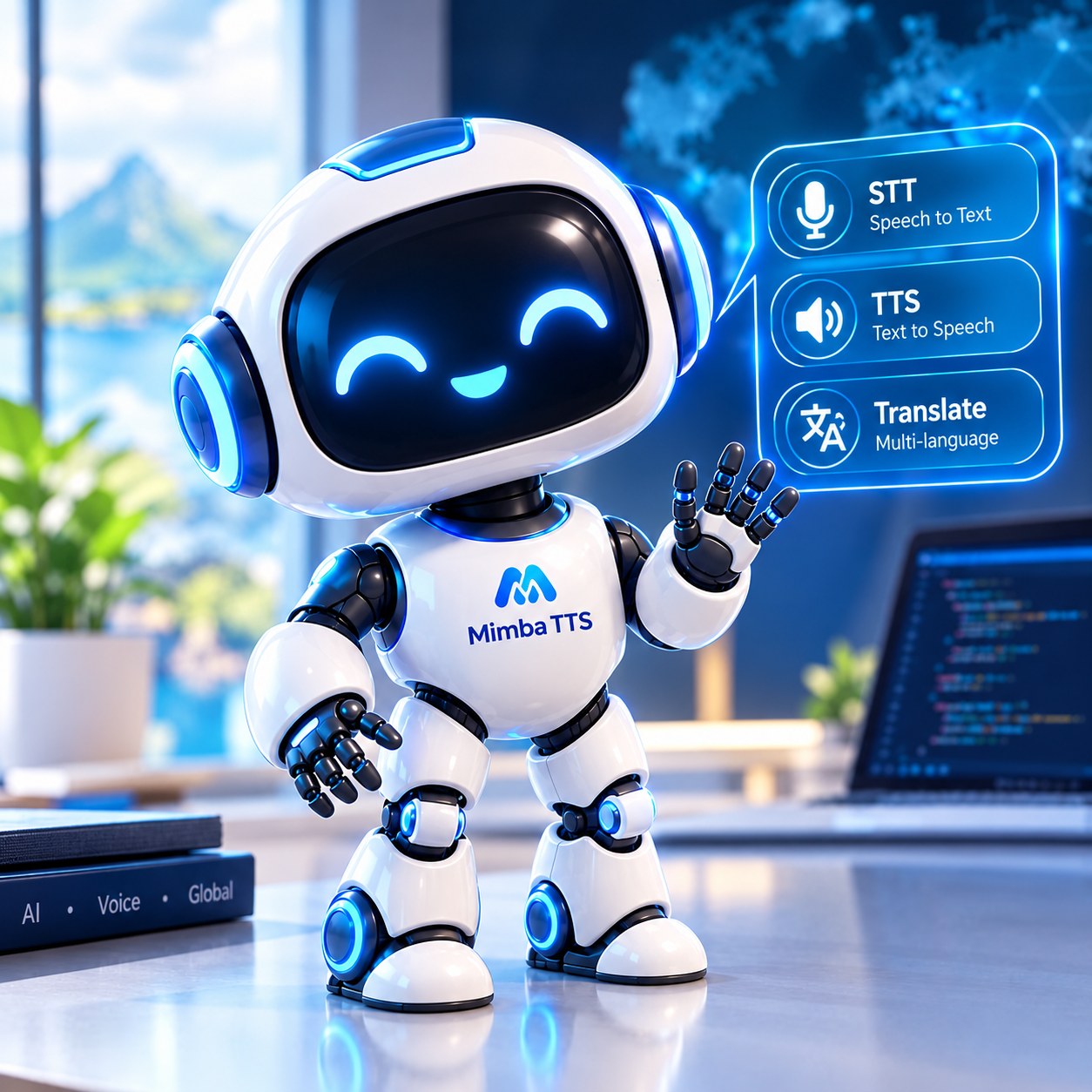
Each SDK works alone or with the others. Models run on the device's processor — no server, no cloud subscription: your users keep their words to themselves.
Speech recognition
Turns speech into text, with one output head per language so Creole and French are never confused. 2.15 % character error rate on average, on the device.
Speech synthesis
Natural voices: one woman and one man for each language — Malagasy, Mauritian Creole, French and English. The technology of Mimba TTS. Your own voice: on request.
Translation
One model for all 12 directions between Malagasy, Mauritian Creole, French and English. Also trained on “misheard” sentences, to stay accurate right after speech recognition.
Robots, humanoids, kiosks
A welcome robot at Ivato airport, a humanoid in a Grand-Baie hotel, a kiosk at a hospital entrance: it listens to the person in front of it, understands their language, translates and answers out loud. It all happens in its head — not in a data centre on the other side of the world.
No network round trip: translating a sentence takes a tenth of a second.
Visitors' voices are never sent or stored — a decisive argument for healthcare, banking and hospitality.
Linux ARM64 and x86, Windows, Android (Flutter, Kotlin): on the robot's own compute board, no GPU required.
Corpora built with speakers from Madagascar and Mauritius, not machine-translated.
Airports, hotels, shopping centres, tourist offices.
A natural conversation with everyone, in their own language.
Hospitals, town halls, service desks: explain, guide, reassure.
Voice translation, read-aloud, voice input.
Languages
Malagasy and Mauritian Creole are missing or poorly served by the big voice assistants. They are our starting languages, not an option.
from mimba_stt import Recognizer
from mimba_translate import Translator
from mimba_tts import Synthesizer

stt = Recognizer("mimba-stt-int8", license="license.json")     # on-device models
tr  = Translator("mimba-translate-int8", license="license.json")
tts = Synthesizer("mimba-tts-bluetts", license="license.json")

text  = stt.transcribe("visitor.wav", language="plt")   # "aiza ny hopitaly"
reply = tr.translate(text, target="fr")                  # "Où est l'hôpital ?"
tts.save(tts.speak(reply, language="fr"), "reply.wav")
val stt = Recognizer.load(File(dir, "mimba-stt-int8"), license)
val tr = Translator.load(File(dir, "mimba-translate-int8"), license)
val tts = Synthesizer.load(context, File(dir, "mimba-tts-bluetts"), license)
val text = stt.transcribe(micPcm, language = "plt")
val reply = tr.translate(text, target = "fr")
audioTrack.play(tts.speak(reply, language = "fr")) // no networkfinal stt = await Recognizer.load('mimba-stt-int8', license: license);
final tr = await Translator.load('mimba-translate-int8', license: license);
final tts = await Synthesizer.load('mimba-tts-bluetts', license: license);
final text = await stt.transcribe(micSamples, language: 'plt');
final reply = await tr.translate(text, target: 'fr');
final voice = await tts.speak(reply, language: 'fr'); // offlineAvailable today: STT, TTS and Translate, in Python (Windows, Linux) and for Android (Flutter and Kotlin).
For developers
A simple interface, designed to be the same on every platform. The model is downloaded once, then everything works offline.
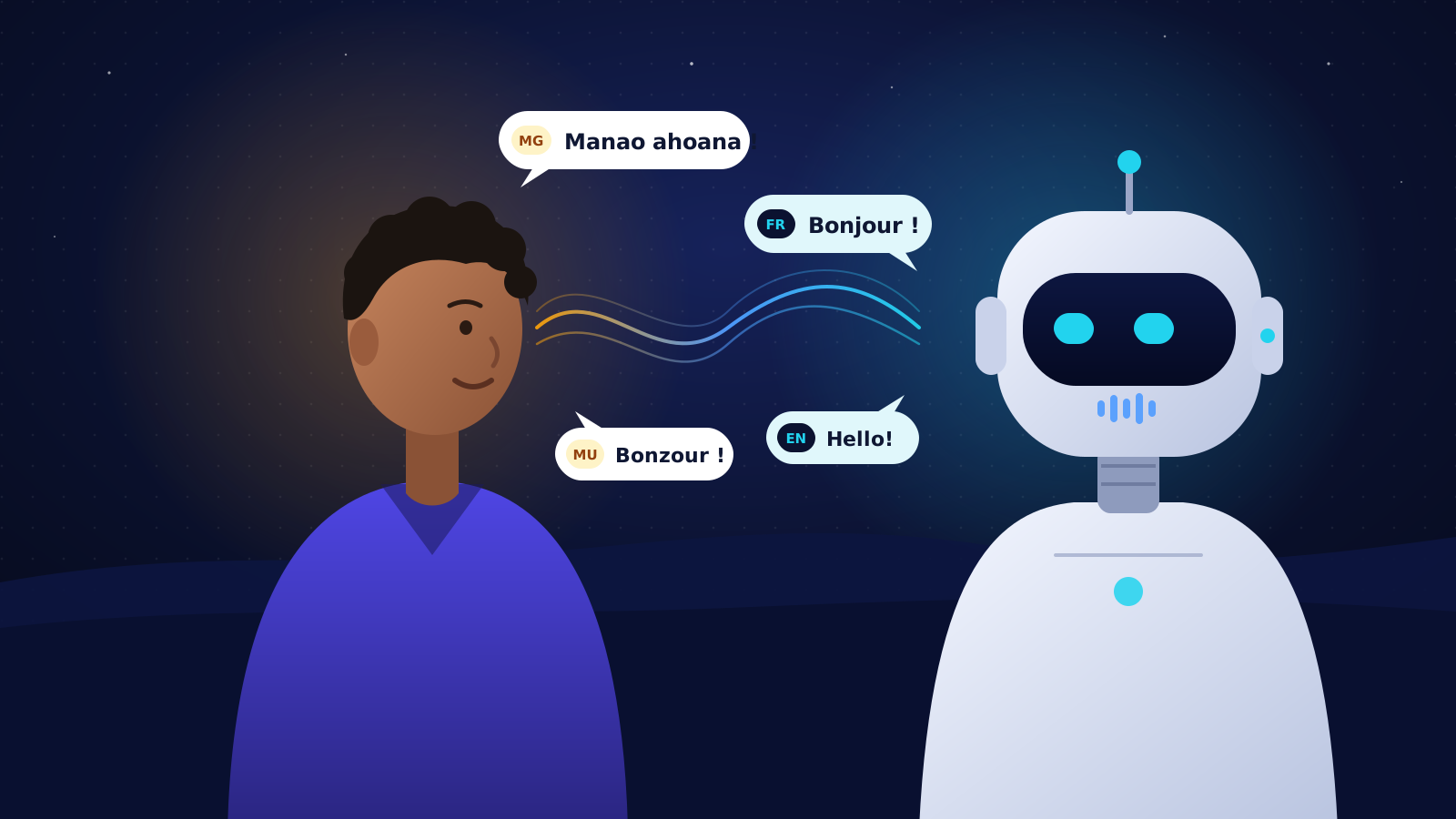
Everyone speaks their own language. The robot, app or kiosk does the rest.
Everything is computed on the device. Data-protection compliant by design.
In a single 95 MB model, between the 4 languages.
Measured on a high-end Android phone (Flutter and Kotlin SDKs).
No per-minute or per-character billing: use it as much as you like.
Yes, entirely: the models run on the device and the licence is a signed file, checked without a connection.
Python on Windows and Linux (x86_64 and ARM64), Flutter and Kotlin on Android. No macOS or iOS for now.
50 USD a year per SDK for an independent developer, 300 USD a year for a company, with unlimited users. Robots and devices in series: on request.
Speech recognition: 2.15 % character error rate on average over the 4 languages, with a language model that corrects the words. Translation: about 85 ms per sentence on one core.
Never. No voice and no text leaves the device.
Yes, on request: we create the voice of your brand or your robot.
Licensing
50 USD / year, per SDK
For a solo developer or a small team: one application.
300 USD / year, per SDK
For companies and commercial applications.
On request
For makers of robots, humanoids and kiosks.


Early access to the SDKs, quotes, a demo on your robot: write to us.